
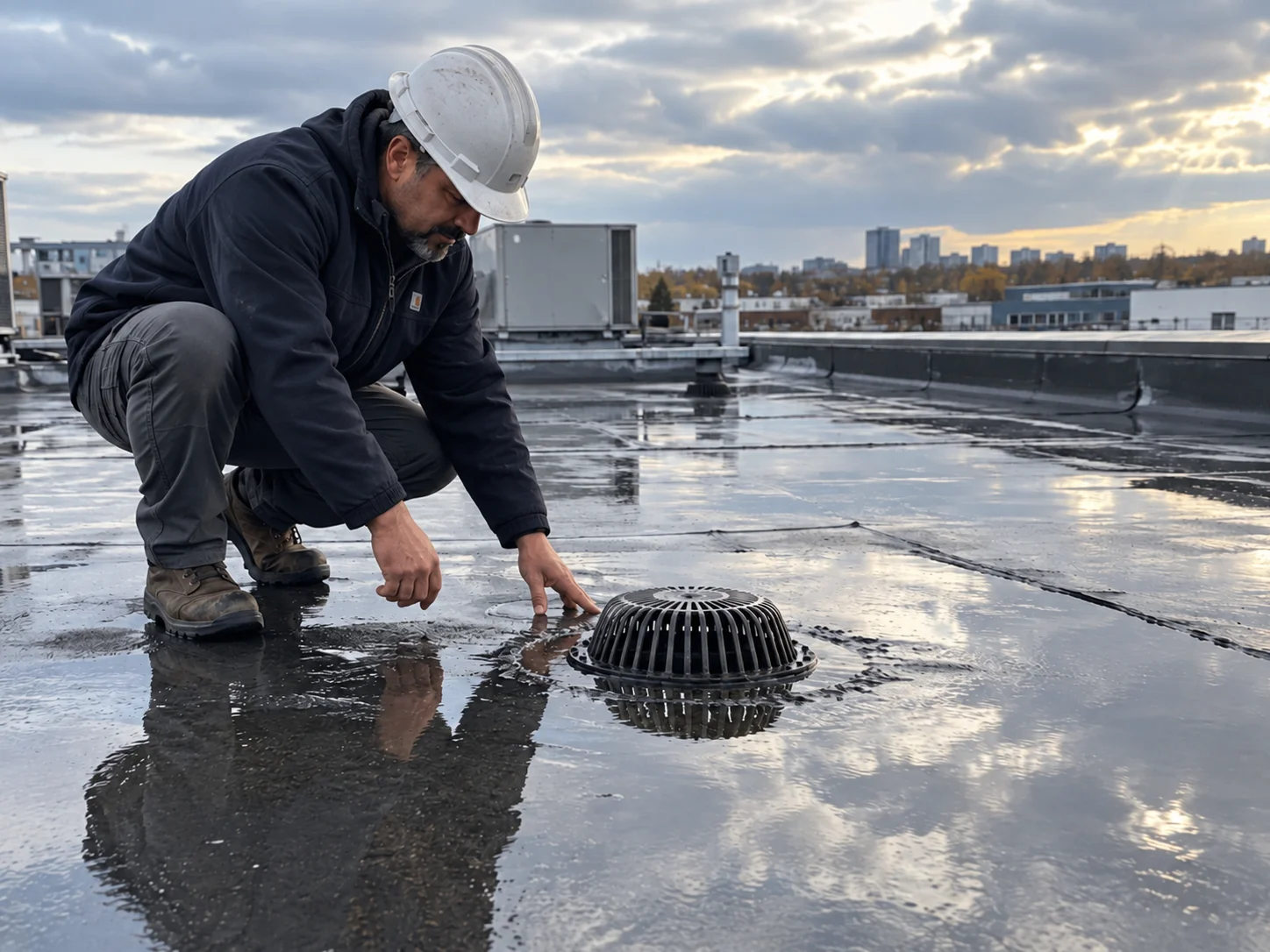
A rainstorm passes, the parking lot begins to dry, and business goes back to normal. Up on the roof, however, shallow pools of water may still be sitting exactly where the storm left them. Because flat and low-slope commercial roofs do not shed water as quickly as steep residential roofs, some temporary accumulation after rain is not necessarily unusual.
The concern begins when that water does not drain away within a reasonable amount of time. Persistent standing water on commercial roofs can point to a clogged drain, a low area in the roof surface, deterioration beneath the membrane, or another issue that deserves attention. What looks like a harmless puddle today may repeatedly expose the same section of roofing to moisture after every storm. Over time, that repeated exposure can shorten the useful life of roofing materials and make existing weaknesses more likely to turn into leaks.
When Does Standing Water Become a Concern?
Roofing professionals commonly use the term ponding water for water that remains on a low-slope roof instead of draining away. A frequently used benchmark is water that is still present about 48 hours after rainfall under conditions that would normally allow the roof to dry, although individual roofing systems and manufacturers may use different criteria. The important point is not to panic over every puddle after a storm, but to notice water that lingers well after surrounding areas have dried.
Commercial roofs are designed to direct rainfall toward drains, scuppers, gutters, or other outlets. A puddle immediately after a Houston downpour is therefore very different from water occupying the same low spot two days later.
Why Does Commercial Roof Ponding Water Happen?
Sometimes the explanation is fairly simple. Leaves, dirt, roofing debris, or other material can obstruct a drain and slow the movement of water off the building. Gutters and downspouts can develop similar problems when debris restricts the path water is supposed to follow.
Other causes require more investigation. Insulation beneath the membrane may compress, portions of the roof deck may settle or sag, or the roof may contain low areas that no longer direct water effectively toward the drainage system. Changes made around rooftop equipment can also affect how water moves, while raised roofing materials or flashing details may unintentionally trap it. In some cases, the issue dates back to the roof’s original slope or drainage design. Ponding may therefore be a symptom of a broader commercial roof drainage problem rather than the problem itself.
Constant Moisture Can Be Hard on Roofing Materials
Commercial roofing membranes are built to withstand weather, but allowing the same area to remain wet again and again creates a different type of exposure. Seams, flashing, penetrations, patches, and aging sections of membrane deserve more attention when water has time to sit around them instead of moving off the roof. Sunlight and heat can also act on materials that repeatedly cycle between wet and dry conditions.
That does not mean every puddle immediately damages a roof. The concern is repeated or prolonged ponding, especially where the roof already has worn seams, small punctures, deteriorated flashing, or earlier repairs. Water can find weaknesses that were not obvious during dry weather. Once moisture gets beneath the exterior roofing layer, the problem may extend into insulation or other parts of the assembly, making the eventual commercial roof repair more involved.
In some cases, the first sign a property manager notices is not on the roof at all. It may be a ceiling stain, damp insulation, an unexplained odor, or moisture appearing near an interior wall after the rain has stopped.
Standing Water Can Add Stress Where the Roof Is Already Low
Water adds weight to a roofing assembly, and that matters when it repeatedly collects in the same depression. A low area may be related to compressed insulation, deck movement, or another condition below the visible membrane. If the affected spot appears to be getting deeper or larger over time, the change itself is worth investigating.
A shallow puddle does not automatically mean there is a structural emergency. Persistent or unusually deep water, however, should be evaluated rather than dismissed, especially if the roof surface appears to be sagging or deflecting.
A Drainage Problem Rarely Fixes Itself
One reason commercial roof ponding water deserves attention is that evaporation can hide the symptom without solving the cause. If a drain is partially blocked, a low area has formed, or the roof is no longer directing water efficiently toward its outlets, the same pond may return during the next heavy rain. That repetition matters because the same materials are exposed again and again. A problem that looks temporary after each storm can become a recurring condition across an entire rainy season.
Greater Houston weather can make that pattern particularly noticeable. Intense rainfall can place a large amount of water on a commercial roof in a short period, so a commercial roof drainage system needs clear pathways to move it away efficiently. After the roof dries, it can be easy to forget the low spot until the next storm fills it again.
Waiting Can Turn a Drainage Issue Into a Repair Issue
Commercial roof repair is generally easier to plan when a problem is caught before moisture has spread through several layers of the assembly. A clogged drain may require a very different response from saturated insulation, damaged membrane, deteriorated flashing, or a roof deck that has developed a significant low area. Early inspection helps separate a maintenance issue from a condition that already needs repair.
Moisture can also travel beneath a roofing membrane before it becomes visible inside the building. The location of an interior drip does not necessarily reveal where water first entered the roof, since water may move along insulation, decking, or structural components before showing up below. By the time staining appears on a ceiling or wall, a contractor may need to investigate a larger area to determine how far the moisture has traveled. Delaying that investigation can make diagnosis and repair more complicated.
There are operational costs to consider as well. A leak over inventory, office space, machinery, or electrical equipment can disrupt normal business even when the roof itself is still repairable.
What Should You Do If Water Is Still on the Roof?
If standing water repeatedly appears after storms, the first goal should be finding out why it is not draining. A commercial roofing contractor can inspect drains and scuppers, examine the membrane and flashing, identify low areas, and look for signs that moisture has affected materials beneath the surface. The solution may be as straightforward as correcting a drainage obstruction, or it may require repairs to the roofing assembly.
Building owners and facility managers should avoid trying to solve an unfamiliar roofing problem by puncturing materials or making improvised drainage changes. Commercial roofs contain membranes, seams, insulation, flashing, mechanical penetrations, and drainage details that work together. An uninformed cut or patch can create a new route for water to enter, and walking on a wet roof can introduce additional safety concerns. If the cause is not obvious from a safe vantage point, an inspection is the better next step.
It can also help to document what happens after rainfall. Photographs showing where water collects, an estimate of how long it remains, and records of earlier leaks or repairs can give the roofer useful information about recurring patterns.
Prevention Starts With Paying Attention After It Rains
Commercial roofs are easy to overlook when there is no active leak. Periodic inspections provide an opportunity to catch blocked drainage points, damaged membrane areas, loose flashing, debris buildup, and other conditions before the next storm exposes them. Checking drainage after significant rain can be particularly useful because it shows how the roof behaves under real conditions rather than when everything is dry.
Inspection becomes even more valuable when a building has mature trees nearby, frequent rooftop work, or mechanical equipment that brings service personnel onto the roof. Foot traffic, dropped tools, construction debris, and changes around equipment can alter drainage paths or damage roofing materials. Seasonal maintenance can also keep leaves and other debris from accumulating around outlets.
Good commercial roof drainage should not depend on someone noticing water dripping into the building. When the roof consistently holds water in one location, that pattern is useful information in itself. Addressing the cause early may involve something relatively straightforward, while allowing it to continue gives moisture more time to exploit an existing weakness. Sometimes the clearest warning sign is simply a puddle that should have disappeared but did not.
Concerned About Standing Water on Your Commercial Roof?
If water continues to collect on your building after rain, Royal Crown Roofing can evaluate the roof and determine whether the problem is related to drainage, damaged roofing materials, or another condition that needs attention. Property owners looking for a commercial roofing contractor in Greater Houston can learn more about the company’s commercial roofing services and the types of systems its team services. An inspection can help establish whether the issue is isolated or part of a larger roofing concern.
For buildings where drainage concerns are connected to the design or condition of the existing roof, Royal Crown Roofing also provides information about its commercial roofing systems. The right next step may be maintenance, targeted commercial roof repair, or a broader roofing solution before the next round of Texas storms arrives.