
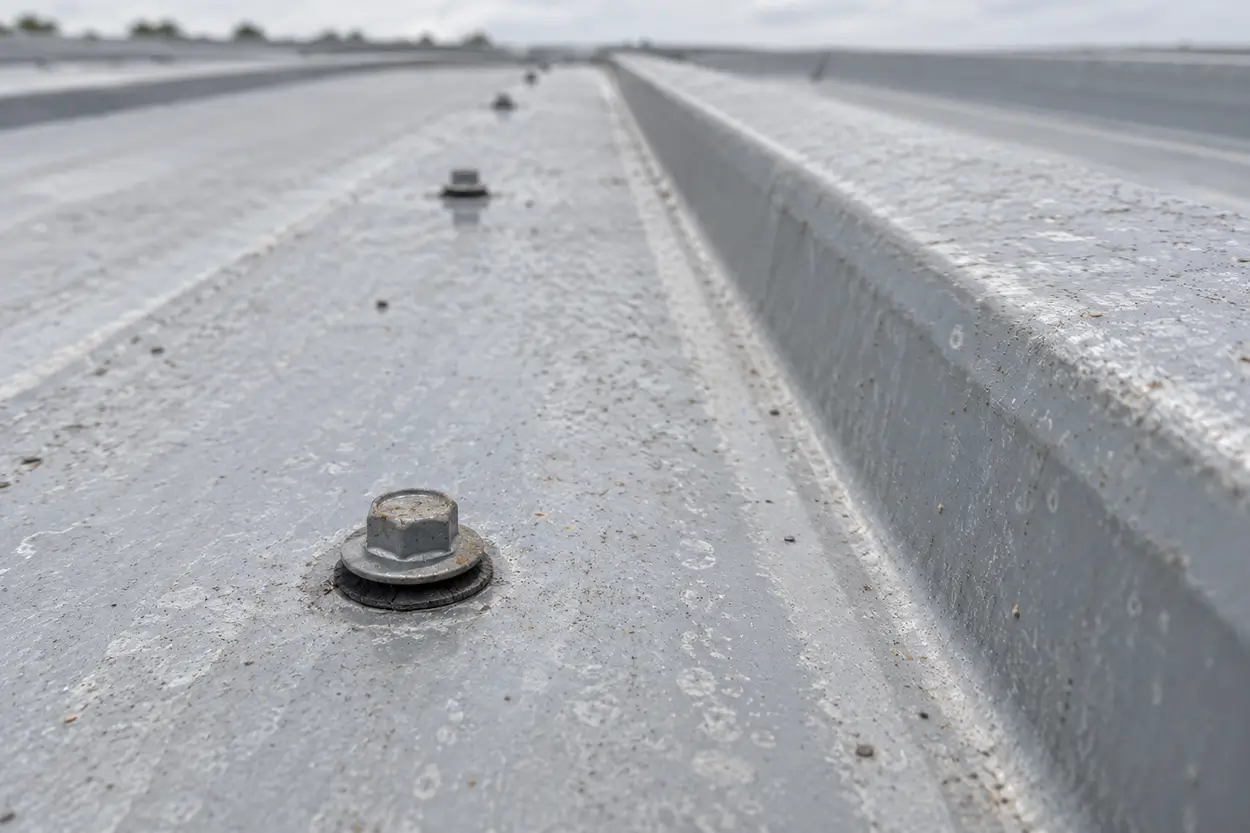
An inspection photo shows a loose screw or a worn washer on your metal roof, and it is tempting to assume the repair will be simple. For a building owner trying to stop a recurring drip, replacing a few fasteners sounds far easier than opening a larger roofing discussion. But a metal roof leaking at screws needs a closer diagnosis before anyone can tell you what work will actually solve the problem.
The useful distinction is between a failed weather seal and a fastener that no longer holds properly. Both deserve attention, and neither should be assumed to explain the leak until the surrounding roof has been checked.
One Connection Has Two Different Jobs
On an exposed-fastener metal roof, screws pass through the panels and remain visible on the finished surface. The screw provides attachment, while a sealing washer beneath its head helps keep water from entering around the penetration. MBCI’s fastening guidance explains that the washer creates its weather seal when compressed between the head and the panel. A screw can look present and reasonably straight while the seal around it is no longer dependable, so counting missing screws is only a starting point.
What Should Be Checked Around a Suspect Screw?
Start with the washer and the way it meets the panel. The inspection should look for deterioration, uneven seating, or damage, rather than treating every visible washer as a sound seal.
Installation can leave clues that resemble aging. SFS explains that overdriving can distort the washer, an angled screw can prevent a complete seal, and an underdriven screw may not seat properly. Those are different conditions even though each can leave an opening for water. A useful inspection photo should show the washer-to-panel contact clearly enough to support the explanation, rather than simply identify a screw near the reported leak.
The next question is whether the fastener has reliable material to hold. Its type and engagement must suit the wood or steel beneath the panel, and corrosion or deterioration there can change the repair needed. SFS cautions that a corroded steel deck or structural member can compromise holding power even after screws are replaced, so the condition beneath the panel deserves attention when grip is questionable.
The panel opening matters too: McElroy Metal explains that thermal movement in exposed-fastener systems can contribute to elongated holes or fastener backout. Have the roofer distinguish damage around that opening from a washer-seating problem, because the repair needs to accommodate the condition actually found.
Why Tightening or Covering the Head May Miss the Problem
More pressure is not necessarily a better seal. McElroy Metal’s installation guidance warns that overdriving can damage a washer or dimple the panel, while underdriving leaves the washer inadequately seated. That makes a blanket instruction to tighten every screw a poor substitute for checking what has failed. If the original connection has lost its grip, the contractor also needs to establish how the repair will restore attachment rather than merely make the head sit lower.
The same distinction applies to sealant: covering a head does not, by itself, demonstrate that the screw is holding correctly. Sealant may belong in a manufacturer’s repair detail, but the proposal should explain its role and address any attachment problem as well.
Ask for a Repair Scope That Explains the Findings
Before approving work, ask what evidence connects the suspect fasteners to the leak. Metal roofs also have laps, flashing, and penetrations that can admit water, so a worn washer nearby is a finding to investigate rather than automatic proof of the entry point. SFS discusses these other details alongside screw-related leaks, which is a useful reminder to keep the investigation open until the cause is supported.
Give the roofer the history you already have: where water appeared inside, which rain events brought it back, and what previous repairs were attempted. Existing inspection photos and roof-system records can help make that conversation more specific without requiring you to climb onto the roof.
The written scope should identify the affected area and explain whether the same condition appears at surrounding fasteners. It should also state what will be done about damaged washers, questionable screw engagement, corrosion, or changes in the panel opening, where those conditions are found. A replacement fastener needs to suit the connection and the panel manufacturer’s requirements; larger or longer is not automatically better. Ask which roof-system instructions support the proposed replacement, especially when the original fastener type is being changed.
This gives you a clearer basis for comparing proposals than a promise to “seal the screws.” You should be able to understand what failed, what evidence supports the repair area, and how the work addresses both weather protection and attachment where needed.
Get Clear Answers About a Metal-Roof Leak
If your building in Spring or North Houston has a suspected fastener leak, Royal Crown Roofing can inspect the roof and discuss the findings with you. Its commercial roof repair and metal roofing services provide a starting point for assessing the existing system. Bring the inspection photos and leak history to the conversation so the next step follows what your roof actually needs.