
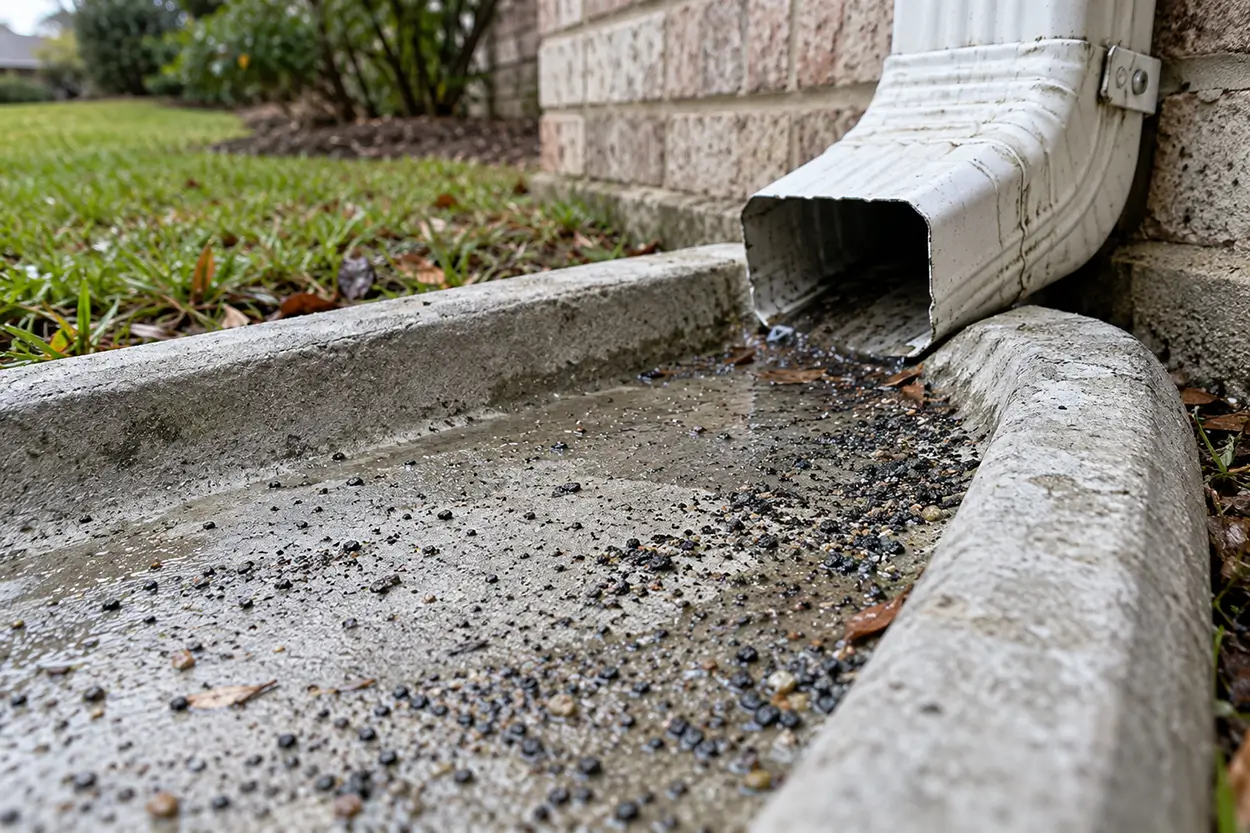
Finding gritty material at a downspout is unsettling when the roof above it is only weeks old. You have just paid for a major project, and you want to know that the shingles are holding up as they should. A new roof losing granules does not automatically mean something has gone wrong, but the explanation should fit what is happening on your roof.
Some loose particles are left over from manufacturing, while missing protective coverage on the shingles is a different concern. The useful question is whether you are seeing harmless excess material working loose or a change that needs a closer professional look.
Why New Shingles Release Loose Granules
The rough mineral surface of an asphalt shingle helps protect the asphalt beneath it from ultraviolet light. Manufacturers apply extra granules to achieve thorough coverage, and some loose particles remain with the packaged shingles. IKO’s roofing FAQ explains that these excess particles, often called “hitchhikers,” can come off after installation and collect in gutters or at downspouts. Their departure is different from losing the embedded granules that cover the asphalt.
GAF’s technical bulletin on new-shingle granule loss describes this early shedding as normal and generally decreasing over time. That means granules in gutters after roof replacement can have an ordinary explanation even when the material looks worrying at first.
Gutter Debris Is Only Part of the Picture
Gutter grit alone does not reveal the condition of the new shingles. Malarkey’s granule-shedding bulletin notes that material left in existing gutters may include granules from the previous roof. Ask whether the gutters were cleared during replacement and when the buildup was first noticed. An assessment should consider the actual shingle coverage, rather than relying on a universal “handful” rule.
Which Changes Deserve a Call to the Installer?
Visible loss of the shingle’s protective surface deserves attention, even on a recently completed roof. TAMKO’s homeowner guidance identifies exposed asphalt caused by excessive granule loss as a reason for prompt attention.
A patch that looks darker from the driveway is a reason to ask a question, not proof of exposed asphalt. IKO explains that lighting, viewing angles, and surface texture can also make shingles appear differently shaded. Ask the installer to distinguish a visual effect from actual missing granules and to show you what supports the finding. The distinction matters when someone is proposing a repair or describing the condition as a product defect.
Keep the installer informed if significant shedding continues, the roof’s appearance changes, or other damage becomes visible. GAF specifically identifies continued significant loss, color changes due to granule loss, and other shingle damage as reasons for follow-up after the initial period. Report a leak or obvious damage promptly rather than waiting to see whether the loose granules settle down.
How to Follow Up Without Guessing
Start the conversation with the installation date, the shingle brand and product name, and where you noticed the material. Include dated photos of an accessible downspout outlet or ground-level buildup, along with any visible change on the roof that you can photograph safely. Mention recent hail, strong winds, or work near the roof without assuming those events caused the condition. If you have photographs from the end of the installation, share those as well.
Manufacturer descriptions of normal shedding do not all use the same timeframe. GAF discusses an observation period of several months, while IKO describes loose excess granules coming off during the first few years of exposure. Ask for guidance tied to your actual shingle product and the condition the installer has observed, rather than treating a calendar date as a diagnosis. A recommendation to monitor should also explain what change would justify an earlier call.
Resist the urge to scrub a patch or brush away loose particles to see what remains. IKO warns that harsh scrubbing can remove granules, which would add a new problem to the one you want assessed. Gather accessible photographs from the ground and leave close examination of the roof surface to the contractor.
After the assessment, ask for a plain explanation of whether the surface remains covered and what, if anything, needs to happen next. If the recommendation is observation, agree on a follow-up point. For a possible product concern, establish who will contact the manufacturer and what documentation is required. Keep that response with your roofing paperwork without assuming that an inquiry establishes a defect or guarantees coverage.
Get an Answer About Your New Roof
If you are concerned about your new shingles, Royal Crown Roofing provides roof inspections for homeowners in Spring, The Woodlands, and North Houston. The company offers residential roof repair and installs GAF roofing systems. Contact the team with your installation details and photos to discuss whether a roof inspection in Spring, TX, is the right next step.