
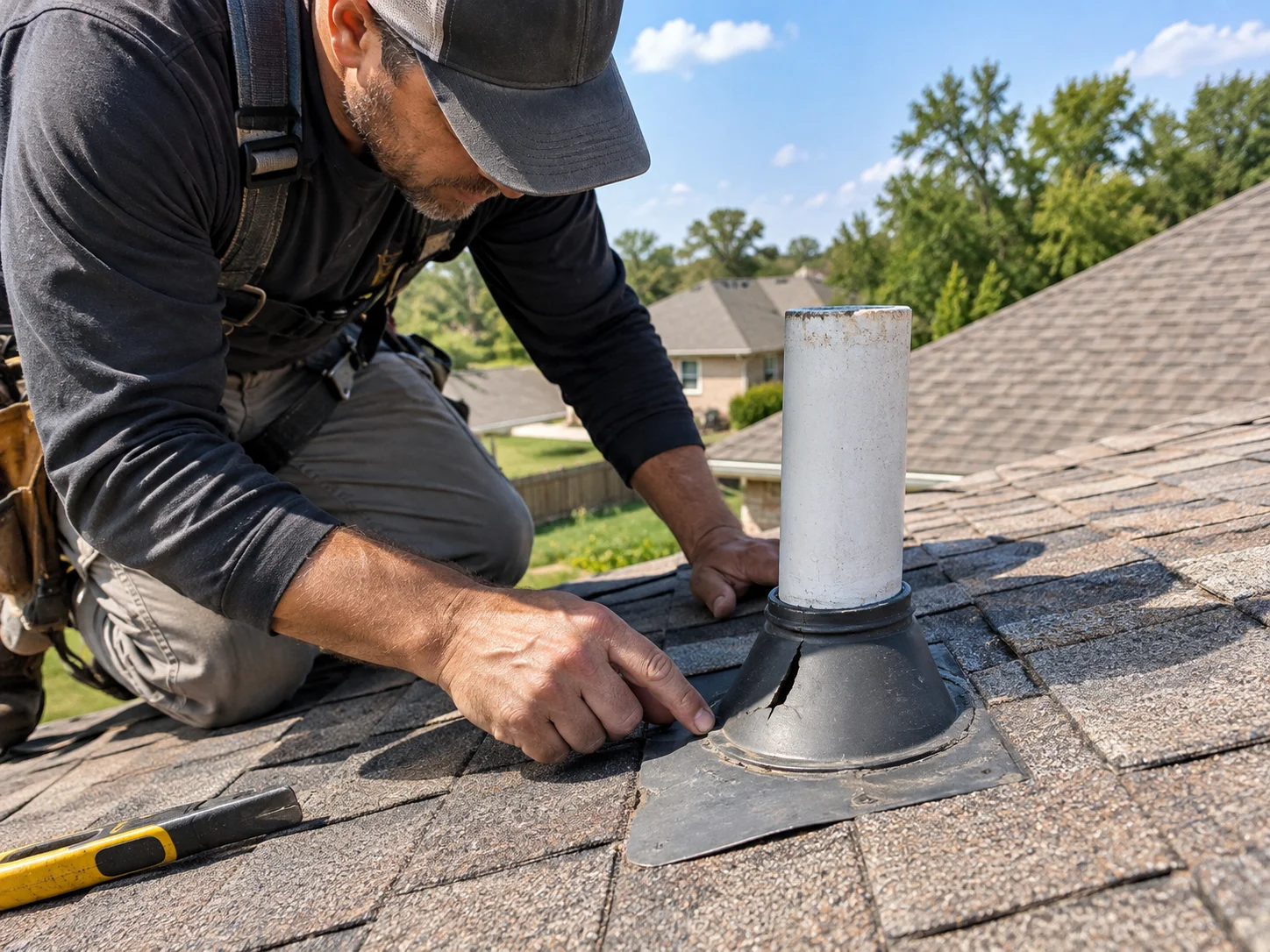
A ceiling stain after a hard rain has a way of making a homeowner imagine the worst. Missing shingles, storm damage, and even a full roof replacement can all flash through your mind before anyone has looked at the roof. Sometimes the source is much smaller: the seal around a plumbing vent pipe that passes through the roof. That is good reason to investigate promptly, but not good reason to panic.
That small assembly is often called a pipe boot, roof boot, or vent pipe flashing. Its job is simple but important because it protects one of the places where the roof’s continuous water-shedding surface has been interrupted. When that seal begins to fail, a roof pipe boot leak can let rain reach the decking or attic even while the shingles around it still appear normal.
What a Roof Pipe Boot Actually Does
Plumbing vent pipes are part of the home’s drainage system, allowing air to move through the plumbing and vent outdoors. Where one of those pipes passes through the roof, the opening has to be made watertight with flashing. On many asphalt-shingle roofs, that assembly combines a flat base with a flexible collar that fits closely around the pipe, although designs and materials vary. The base must work with the surrounding shingles to shed water while the collar maintains the seal around the penetration.
Why Texas Weather Can Be Hard on This Small Roof Detail
A pipe boot sits in full exposure to sunlight, heat, rain, humidity, wind, and repeated temperature changes. Roofing elastomers are made for outdoor service, yet industry weathering standards still evaluate heat aging, ozone, and ultraviolet exposure because these conditions matter to long-term performance. The roof is a demanding place for any flexible sealing material.
That does not mean Texas heat ruins every pipe boot on a fixed timetable. Product design, material, roof pitch, installation quality, and the way the vent pipe fits through the flashing all affect how the detail performs. Over years of exposure, however, some collars can become less flexible, pull away from the pipe, split, or lose the shape that once kept the opening tight. A boot that was installed under stress may also show problems sooner than one that was fitted correctly.
Movement adds another layer to the issue. A vent pipe and the roofing around it expand and contract as temperatures change, so the flashing assembly has to accommodate normal movement without opening a path for water. A poor fit, loose base, exposed fastener, or deteriorated sealant can upset that balance.
The Early Signs Are Often Quiet
A cracked roof pipe boot rarely announces itself with a dramatic stream of water. The first clue may be a pale ceiling ring that appears after a storm, damp attic insulation, staining on the decking near a vent, or a musty patch that seems to come and go. Because the leak may depend on wind direction or how hard the rain is falling, the evidence can disappear between storms. That stop-and-start pattern is one reason these leaks are easy to postpone.
Location can help narrow the search, but it should never replace an inspection. Plumbing vents commonly serve bathrooms, kitchens, and laundry areas, so a new stain near one of those spaces on an upper floor may put the vent flashing on the list of suspects. A roofer still needs to trace the actual entry point rather than assume the nearest pipe is responsible.
A Roof Vent Pipe Leak May Show Up Somewhere Else
Water does not always fall straight down from the place where it entered. Once it reaches the underside of the roof, it may follow decking, framing, fasteners, or another surface before reaching insulation or drywall. The wet spot you see indoors can therefore be several feet from the failed flashing. That is why repainting a stain or sealing the first visible gap can be misleading. Good leak diagnosis works backward from the evidence and checks the vent boot, surrounding shingles, flashing, underlayment, and decking until the actual water path makes sense.
Is Caulk Enough to Fix a Pipe Boot Leak?
Sealant has legitimate uses in roofing, but it should not become a substitute for understanding what failed. If the flexible collar is split, distorted, or no longer gripping the pipe, covering the crack with sealant may only mask a component that needs a more complete repair. The same concern applies when the flashing base or nearby roofing materials are damaged.
There are situations where a qualified roofer may use compatible sealant as part of a repair, depending on the flashing design and manufacturer instructions. What matters is whether the repair restores the assembly correctly rather than simply coating the symptom. If the boot itself needs replacement, the surrounding shingles may have to be lifted or replaced so the new flashing can be integrated properly. Homeowners should be told what failed, what is being replaced, and why that approach is expected to keep water out.
When a Pipe Boot Problem Can Stay a Localized Repair
One reassuring thing about this kind of leak is that a failed boot does not automatically mean the whole roof is failing. If the surrounding materials are sound, the repair may remain limited to the vent flashing and the roofing immediately around it.
The inspection still needs to answer how far the water traveled before the problem was found. A small opening can remain a focused repair when caught early, but repeated moisture can eventually affect decking, insulation, or interior finishes. That is why the size of the visible crack is not the same thing as the size of the repair. The scope should follow the actual condition of the materials beneath and around the boot.
Early attention matters financially without turning every stain into an emergency. Repairing a failed component before moisture has time to create secondary damage is usually easier to plan and easier to understand. The point is not urgency for its own sake; it is keeping a manageable defect from quietly becoming a more involved project.
What a Roofer Should Check Around the Vent
A useful inspection looks beyond the flexible collar alone. The roofer should see how the flashing base is integrated with the shingles, whether it is cracked, lifted, distorted, or corroded, and whether fasteners or sealant are exposed where water can reach them. The vent pipe itself should also be checked for a fit or position that is placing unusual stress on the boot, while the surrounding roof surface should be examined for a separate leak source uphill. When attic access is practical, staining or dampness below the vent can help confirm the water path and show whether moisture has reached insulation, framing, or decking.
What Homeowners Can Safely Notice
You do not need to climb onto the roof to take a possible plumbing vent roof leak seriously. From the ground or a safe upper window, you may be able to notice flashing that looks lifted, shingles around a vent that appear disturbed, or a collar with an obvious split. Indoors, pay attention to when the stain appears and whether it changes after particular storms.
Photographs and timing can be surprisingly helpful when you call for roof repair in Spring, TX. A picture of the ceiling stain after rain, the room where it appeared, and any attic moisture you can safely observe gives the roofer a useful starting point. If the mark fades when the weather dries, keep the photo rather than assuming the problem resolved itself. Leave the rooftop inspection to someone with the equipment and experience to work safely on the slope.
A Small Roof Component Deserves a Real Diagnosis
Pipe boots are easy to overlook because they are small and ordinary, but every roof penetration depends on flashing to keep water outside. The International Plumbing Code specifically requires the junction between a vent pipe and the roof line to be made watertight with approved flashing. When a stain appears after rain, the most useful next step is neither to assume the roof is ruined nor to dismiss the problem as minor. Find out what failed, how much of the surrounding assembly is affected, whether the materials beneath it are still sound, and what repair will restore the water-shedding system correctly. Clear answers make it much easier to spend money where it is actually needed.
Need Help With a Roof Pipe Boot Leak in Spring, TX?
If you suspect a roof pipe boot leak, Royal Crown Roofing can inspect the roof, trace the source of the moisture, and explain whether the problem is limited to the vent flashing or involves surrounding roofing materials. Homeowners can start with the Royal Crown Roofing homepage, learn more about roof repair services, or review the company’s Spring roofing services for local help. The goal should be a repair that addresses the source and gives you a clear reason for every step.
A small leak does not need a dramatic sales pitch, but it does deserve a real diagnosis. Knowing what failed, what needs attention now, and what can safely wait makes the next decision much easier.