
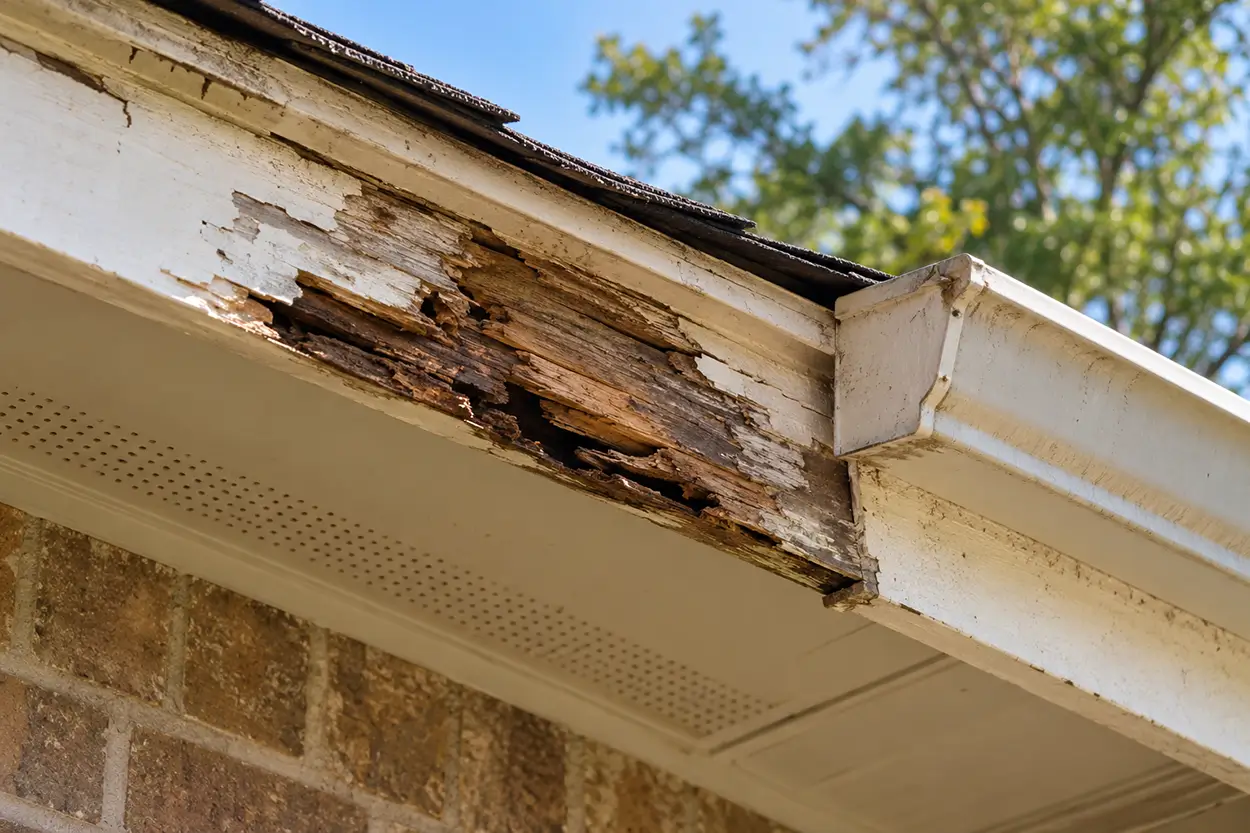
It’s easy to overlook peeling paint along the roofline, especially when the shingles look fine. But when the wood behind that paint stays damp, the problem can be more than cosmetic. Rotted fascia boards can weaken gutter attachment points and indicate that rainwater is reaching areas that should remain protected from moisture.
The important question isn’t simply how to cover the damaged wood. It is why the fascia became wet, whether the damage is limited to one board, and what needs to change so a repair lasts.
What Is a Fascia Board, and Why Does It Matter?
A fascia board is a finishing board that runs along the outer edge of many residential roofs, typically at the ends of the rafters. It helps close off the roof edge and commonly provides a mounting surface for gutters. The soffit covers the underside of the roof overhang. Although the fascia and soffit are located close together, they serve different purposes.
Not every fascia is wood. Some homes use aluminum, vinyl, fiber cement, or other materials. When homeowners talk about fascia rot, they are usually describing deterioration of wood that has been exposed to persistent moisture.
Why Roof Fascia Boards Rot
Wood rot develops when moisture creates conditions that allow decay to occur. A board that occasionally gets wet and dries properly is less vulnerable to rot than one repeatedly exposed to runoff or trapped moisture. The source of moisture near the roof edge may be difficult to identify from the ground.
Overflowing or leaking gutters can keep the back or upper edge of a fascia board damp. Water can also seep behind gutters when drip-edge flashing is missing, damaged, or improperly installed. In other cases, a leak higher on the roof reaches the eaves before it becomes visible outside.
Paint and exterior coatings help protect exposed wood, but they cannot correct a drainage defect. Repainting a board while water continues to enter from above may briefly improve its appearance without stopping the deterioration.
Signs of Rotted Fascia Boards You Can Notice From the Ground
The first clue may be a patch of bubbling or peeling paint near a gutter joint. Dark staining, warped trim, splitting wood, or a section that looks swollen compared with the rest of the roofline can also warrant attention. These signs suggest moisture exposure, although appearance alone cannot confirm how deeply the wood has deteriorated.
Watch the gutter line as well. A gutter that sags, pulls away from the roofline, or repeatedly overflows in the same area may indicate weakened fascia boards, loose fasteners, or drainage problems. The distinction matters because repairing only the visible trim will not solve a gutter that continues to overflow.
Some of the most important damage is hidden behind gutters or metal trim. A fascia board may appear intact on the outside even when the wood underneath has deteriorated. If you see an obvious soft area, a loose gutter, or signs of moisture spreading into the soffit, arrange a closer professional assessment rather than probing from a ladder.
Does Rotted Fascia Mean You Need a New Roof?
In most cases, a single rotted fascia board does not necessarily mean the entire roof needs replacement. The appropriate scope depends on where the water entered, how far it traveled, and whether nearby roof-edge materials or structural wood have also been affected.
A localized problem might call for replacing a damaged section of fascia and correcting the gutter or drip-edge detail that allowed it to get wet. More extensive deterioration may require opening the area to inspect the soffit, rafter ends, or adjacent decking. The extent of the repairs should be determined through a professional inspection rather than the size of a visible paint stain.
What a Lasting Fascia Repair Should Address
An effective fascia repair begins by identifying the source of moisture. The contractor should determine whether water is coming from the gutter, the roof edge, a nearby roofing defect, or another source. Only then is it possible to decide which materials need repair or replacement.
When wood has deteriorated, applying fresh paint or attaching a new gutter to the weakened area will not provide a lasting solution. Damaged boards may need to be removed, underlying attachment points inspected, and replacement materials properly installed and protected against future moisture exposure. If gutters or drip-edge flashing must be temporarily removed, they should be reinstalled so runoff moves away from the wood.
Ask what caused the damage and how the proposed work addresses that cause. A clear explanation should distinguish the visible fascia repair from any additional roof-edge or gutter work, so you understand what is necessary and what is optional.
What Homeowners Can Do Before an Inspection
Take photos of the affected roofline from the ground, including the gutters and any stains below them. Note whether the damage becomes more noticeable after heavy rain or if the same gutter section repeatedly overflows. These details can help narrow down the source.
Avoid climbing onto the roof or leaning a ladder against loose gutters or damaged trim. Do not pull off boards to investigate concealed rot yourself. A professional can assess the roof edge more safely and determine whether nearby materials need to be opened for inspection.
Concerned About Rotted Fascia Boards in Spring, TX?
Peeling paint, dark stains, or deteriorating wood along your roofline may be signs of an underlying moisture problem. Addressing the source early can help prevent further damage to the fascia and surrounding roofing materials.
If you’ve noticed these warning signs, Royal Crown Roofing can help you take the next step. Explore our residential roofing services or contact our team to schedule an assessment. We’ll help you understand what may be causing the damage and what repairs might be needed to protect your home.