
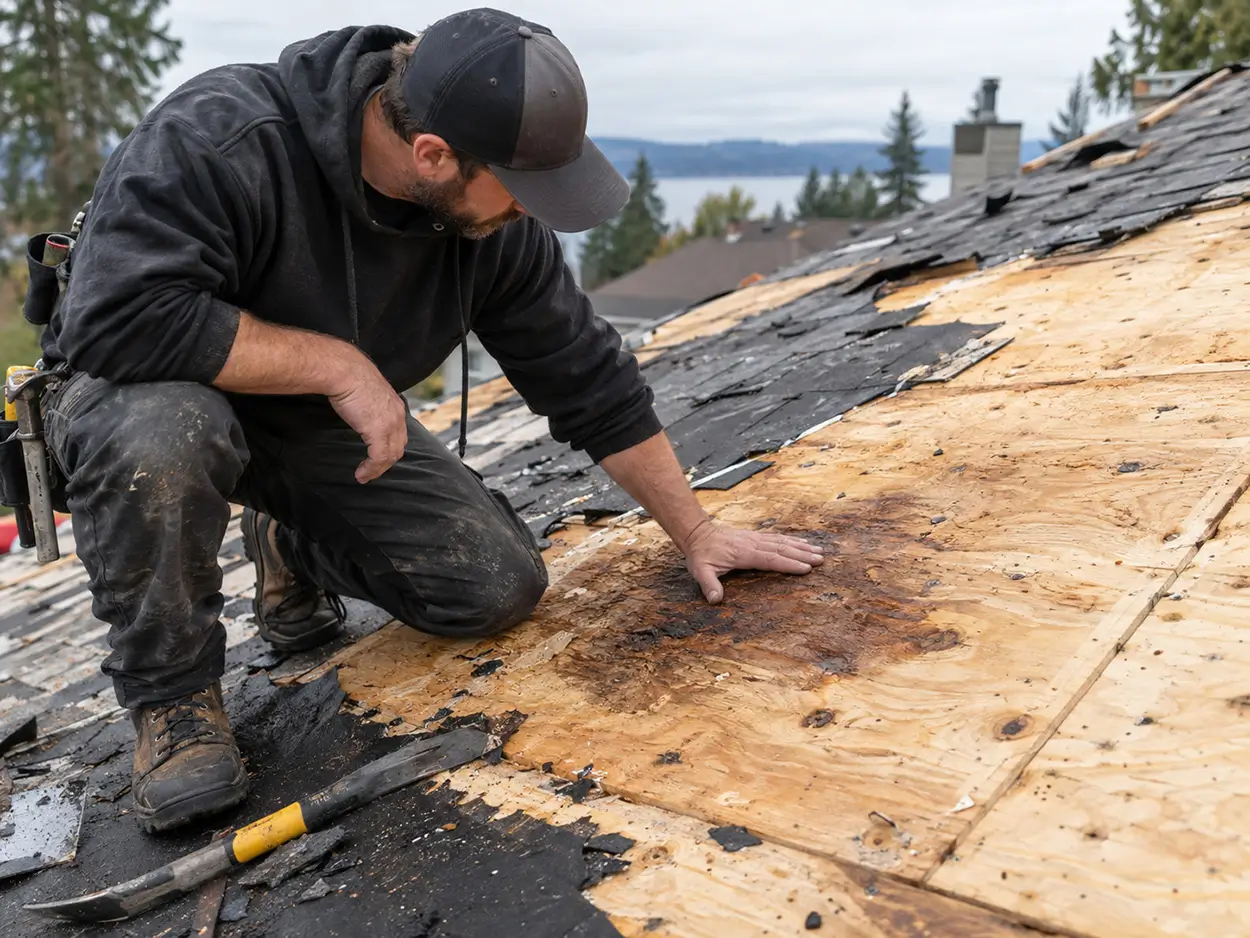
The part of a roof homeowners see every day is usually the shingles. Underneath them, however, is the roof decking: the plywood or oriented strand board (OSB) that gives the roofing system a solid surface to rest on. Because it is hidden once the roof is finished, trouble in this layer can develop quietly and stay out of sight until a repair or replacement exposes it.
Finding wet roof decking can be unsettling, especially when everything looked normal from the driveway. The good news is that moisture exposure does not automatically mean the decking is ruined or that large sections must be replaced. What matters is how much water reached the wood, how long it stayed wet, whether it was able to dry, and what condition the panel is in now. Those details tell a much more useful story than a water stain by itself.
Why Roof Decking Gets Wet in the First Place
Water can reach roof decking in several ways. A damaged shingle, aging flashing, a failed seal around a roof penetration, or a breach in the underlayment can allow rain to work beneath the visible roofing materials. Sometimes the entry point is close to the affected decking; other times, water travels before it finally settles into the wood.
A ceiling stain does not always tell you exactly where the roof problem began. Water can follow framing, fasteners, seams, and gravity for some distance before becoming noticeable indoors, so the decking above the stain may not be where the leak actually started.
Moisture can also reach the underside of the roof when warm, humid air condenses in the attic. That is a different problem from a direct roof leak, but repeated dampness can still affect the underside of the decking. Simply replacing a damaged panel will not solve much if the condition that wet it is still present. Finding the source first is what keeps the same problem from returning.
Wet Does Not Automatically Mean Rotten
This is where roofing conversations can become unnecessarily frightening. Plywood and OSB are wood products, so they react to moisture, but a panel that gets wet is not automatically a failed panel.
APA – The Engineered Wood Association notes that wood structural panels can remain structurally sound after significant moisture exposure. Wood absorbs moisture and may swell as it does so, then change again as it dries. Some roughness, edge swelling, or dimensional change can remain after re-drying, especially after heavier exposure. Appearance matters, but it is not the only test of whether the panel is still serviceable.
The more useful question is not simply, “Has this wood ever been wet?” It is, “Is this decking still sound enough to do its job?” That distinction protects homeowners from two bad outcomes: ignoring genuinely damaged wood or replacing usable material simply because it carries a stain.
What Moisture Can Do to Plywood and OSB
Wood structural panels are hygroscopic, meaning they take on and release moisture as environmental conditions change. As moisture content rises, panels can expand in length and thickness; if that movement is restricted or repeated through wetting cycles, buckling, raised edges, uneven surfaces, or visible swelling may develop.
A short wetting event followed by proper drying may leave a panel usable. Prolonged or repeated exposure deserves more attention because the panel can remain wet long enough for its condition to deteriorate. In some cases, plywood can delaminate or the surface can become distorted. In others, the panel may dry and remain perfectly capable of serving as roof sheathing.
That is why roof deck water damage deserves a hands-on evaluation rather than an automatic verdict. A roofer can look for softness, excessive swelling, sagging, delamination, deterioration, or other signs that the material is no longer providing a stable base. A stain alone is information; it is not a diagnosis.
Why Damaged Decking Matters to the Rest of the Roof
Roof decking is not just something shingles happen to sit on. It supports the roofing layers above it. It also provides a surface for fasteners and helps the assembly remain flat and stable. When that base becomes weak or distorted, the materials installed over it may not perform the way they were designed to.
A soft section may not provide the secure fastening surface a roof needs. Swollen or uneven decking can make it harder for underlayment and shingles to lie flat, while sagging can signal a more serious loss of support; those are very different conditions from a panel that is merely discolored after an old leak.
None of this means a homeowner should assume the worst because a roofer uncovers a damp-looking area during a tear-off. The discovery deserves a clear explanation, not a dramatic one. You should be able to see what was found and understand whether the material is stained or actually compromised. You should also hear why a repair is or is not being recommended.
Can Wet Roof Decking Simply Dry Out?
Sometimes, yes. APA guidance recognizes that plywood and OSB can remain serviceable after substantial wetting, and drying is often part of evaluating what condition the panels are really in. A panel that has dried and remains sound is a very different situation from one that has become soft, swollen, or deteriorated.
The circumstances matter. Letting sound sheathing dry after a brief leak is not the same as covering a chronically wet area with new roofing materials and hoping the problem disappears.
Timing can make the difference between guessing and knowing. When a roof is already opened for repair or replacement, the contractor can see decking that is normally hidden and inspect it directly. That may show that an old leak left only surface staining, or it may reveal damage that needs attention before the new roof goes on. Either way, the decision can be based on what is actually there.
When Roof Decking Replacement Makes Sense
Roof decking replacement generally makes sense when a panel can no longer provide a sound, stable base for the roofing system. Wood that has become soft, badly swollen, delaminated, sagging, or deteriorated from prolonged moisture exposure may need to be removed rather than covered.
Not every affected roof needs large-scale decking replacement. Damage may be limited to one area around a flashing detail, valley, vent, or other point where water entered, allowing targeted replacement once the source is corrected.
Homeowners should feel comfortable asking to see the damaged area before approving additional work. Photos or video can be especially helpful when the decking is only visible during a tear-off. A good contractor should be able to explain what has changed in the wood and why that change matters. You should not have to approve an unexpected repair based on pressure or a vague statement that the decking “looks bad.”
What If the Decking Looks Fine From the Attic?
An attic view can provide useful clues, but it does not reveal every part of the roof deck. Water can affect the upper surface before staining becomes obvious below, and insulation or framing may hide portions of the sheathing from view.
That is why a roof inspection may combine several pieces of information: what is visible outside, what can be seen in the attic, the history of leaks or storms, and what is discovered when roofing materials are removed. No single clue is as useful as understanding how those pieces fit together.
For Greater Houston homeowners, that broader view is worth having because roofs routinely deal with strong sun, humidity, heavy rain, and severe storms. Those conditions do not mean a roof deck is destined to fail. They do, however, give small openings repeated chances to let water in. Catching and correcting the source early can keep a localized problem from becoming a much larger one.
A Little Clarity Can Prevent a Lot of Worry
Unexpected roof damage has a way of making people imagine the largest possible repair. That reaction is understandable. A roof protects the rooms where people sleep, the things they have worked to own, and the ordinary sense of security that comes from knowing the house will stay dry when the weather turns bad.
A more useful response is to slow the problem down and ask better questions. Start with the source: where did the water come from, and has that problem been corrected? Then look at the material itself: is the decking still structurally sound, and has it had a chance to dry? Finally, ask whether the affected area truly needs replacement or can remain safely in service.
Those questions turn a vague worry into something that can actually be evaluated. Good roofing advice should leave a homeowner with more clarity than fear.
Need a Roof Inspection in Greater Houston?
If you are concerned about wet roof decking or signs of a roof leak, Royal Crown Roofing can inspect the roofing system and help determine what is happening beneath the visible surface. Homeowners can learn more through the Royal Crown Roofing homepage or explore its roof repair services for help with leaks, damaged decking, and related roofing concerns. The goal is to understand what the roof actually needs, not to assume every moisture mark calls for the same repair.
A professional evaluation can help separate cosmetic staining from damage that genuinely needs attention. Once the source of moisture and the condition of the decking are clear, the next decision becomes much easier to make with confidence.